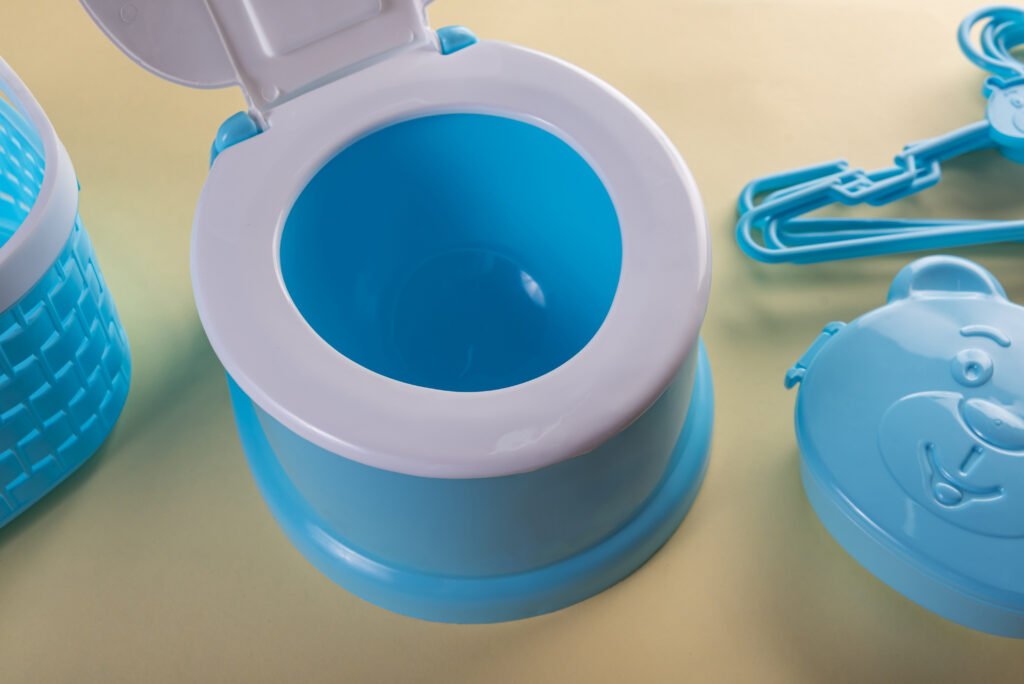
Potty training is a long process and requires a different approach for many autistic children compared to neurotypical children. Some factors include sensory processing, communication, routine-based thinking, and interoception (the sense of what’s happening inside one’s own body, including the urge to go). With lots of patience, the right strategies, and faith, most autistic children can and do learn to use the toilet, just on their own timeline. Speaking with your child’s pediatrician, occupational therapist, and behavior therapist can help tailor an approach and coming up with a plan.
Potty Training Challenges
- Interoception differences — Some children don’t notice or interpret the body’s signal of “I need to go” until it’s too late, or don’t connect that internal sensation with the concept of using a toilet.
- Sensory sensitivities — The toilet flushing sound, the cold feeling of the toilet seat, the flat hard surface of the toilet seat, the sensation of sitting over open water, and the water moving fast along with the sound can be challenging to autistic children in their struggles with using the toilet.
- Communication differences — A child may be fully capable of holding it but unable to communicate the need in the moment, especially non-verbal or minimally verbal children.
- Preference for routine and resistance to change — Wearing diapers are a comfortable and predictable routine since infancy; using the toilet is new and unpredictable, which can create resistance.
- New process — Since diapers are easier, and moving onto the process of using the toilet, undressing, sitting, going to the bathroom, wiping, redressing, and washing hands involves a long sequence of steps that can be genuinely difficult to plan through, especially early on.
- Recognizing which of these factors (often more than one) is at play for a given child helps in choosing the right strategy rather than assuming pure resistance or lack of readiness.
Tips/Solutions for Parents
- Address the sensory sensitivities first. If a child avoids the bathroom altogether, work on making it comfortable for them before introducing any toileting expectation — constant visits to the bathroom without them using it, bringing a favorite toy, using a step stool for stability and comfort, including a padded seat insert, and even letting the child pick their own toilet paper or hand soap can lower resistance.
- Use a visual schedule or social story. A simple sequence of pictures or a short, personalized story walking through each step.
- Build a consistent, predictable routine. Taking the child to the bathroom at the same times each day uses habit and timing instead of relying on internal cues alone at first.
- Give the child a communication method for the bathroom, even if they are nonverbal. Visuals or an AAC button dedicated to “bathroom” gives a child a way to request or indicate need without relying on spoken language.
- Break the sequence into small, separately taught steps. Rather than teaching “use the toilet” as one big skill, many children do better when each piece (pulling pants down, sitting, wiping, pulling pants up, washing hands) is taught and reinforced individually before being chained together.
- Use reinforcements that’s meaningful to the child: Praising the child, giving a specific preferred reward — a favorite short video, a sticker toward a visual reward chart, a few minutes of a preferred activity, a toy tied immediately to a successful attempt (not just a successful result) can build the connection faster.
- Reduce the flush/water sensory load if needed. If flushing sounds or the sensation of an open toilet is upsetting, a child can start using a training seat, a portable potty in a familiar room, or a plan to flush after leaving the bathroom, gradually working up to the standard routine.
- Again, coordinating with any therapy team the child already has: Behavior therapists and/or occupational therapists. They can incorporate the potty training into existing sessions using the same reinforcement systems and communication tools the child is already familiar with, which improves consistency across settings.
Leave a Reply